

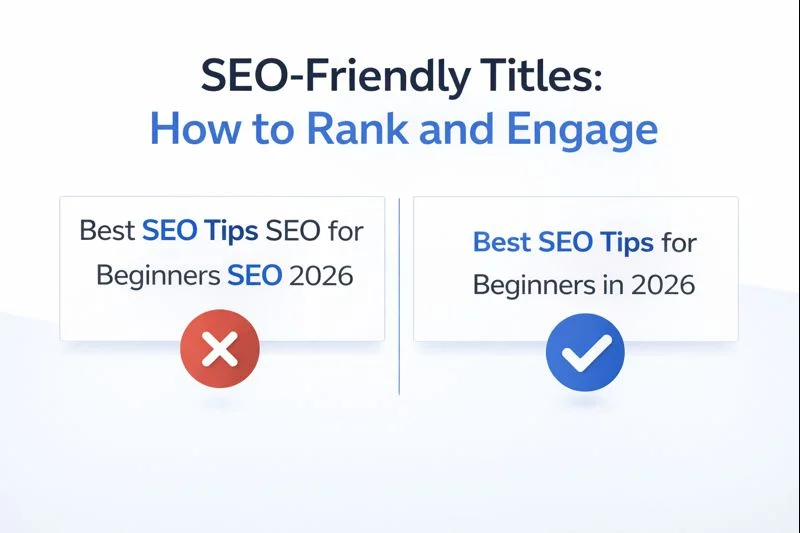
Writing SEO-friendly titles that actually rank on Google can be a tough challenge. You might find yourself spending hours creating the perfect piece of content only to see it buried deep in search results. So, how can you ensure your hard work doesn’t go unnoticed? The answer lies in the title. Titles are often the first thing Google and your readers notice. You need a title that not only grabs attention but also boosts your chances of ranking higher. It’s not just about being catchy; it’s about being SEO-friendly.
Why SEO-Friendly Titles Matter
I know the pain of spending hours crafting valuable content only to have it overlooked because the title didn’t match search intent or SEO best practices. If you’re dealing with the frustration of poor visibility, you’re not alone. Whether you’re an SEO professional or a content writer, one thing remains clear: you need titles that work. But how do you create those titles?
Start with Keywords That Matter
The first step in writing SEO-friendly titles is selecting the right keywords. Keywords are the foundation of SEO. Without them, your title might not rank at all. But don’t worry—finding the right keywords isn’t as difficult as it seems.
Use keyword tools like Google Keyword Planner, Ahrefs, or SEMrush to discover what people are actually searching for. Look for long-tail keywords—those phrases that are more specific but still highly searched. For example, if you’re writing about improving website rankings, using a keyword like “how to improve website ranking” will be more effective than simply “SEO.”
Once you have your target keyword, place it at the start of your title. Google gives more weight to words that appear early, so putting your keyword upfront helps you rank higher. This isn’t just a suggestion—it’s a proven strategy.
Be Specific and Direct
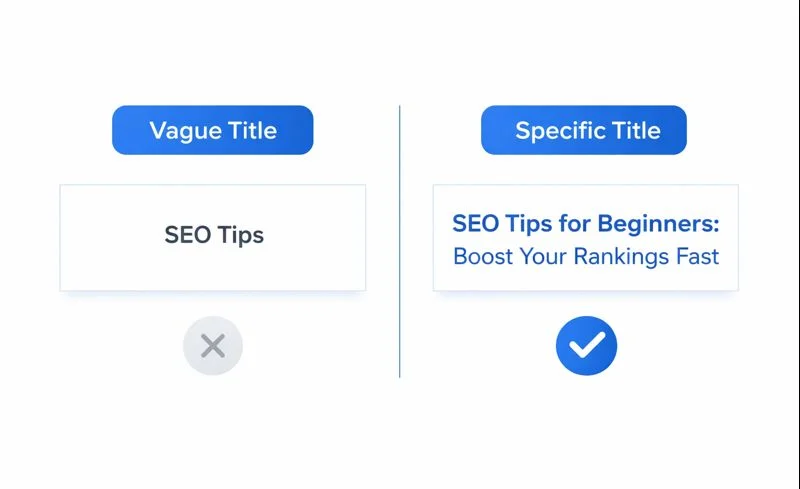
Vagueness doesn’t work in SEO. If you’re writing about SEO for beginners, don’t just use a broad title like “SEO Tips.” You need to get specific. Instead, opt for a title like “SEO Tips for Beginners: Boost Your Rankings in 30 Days.” This is clear, informative, and targets the right audience.
The more specific your title is, the easier it is for both Google and readers to understand what your content is about. Specificity helps you stand out from the competition. Think of it this way: if you walk into a bookstore, you wouldn’t pick up a book titled “Self-Help.” You’d go for a title like “How to Overcome Procrastination: A Step-by-Step Guide.” That’s what you need to aim for in your titles—clear, straightforward, and precise.
Keep It Under 60 Characters
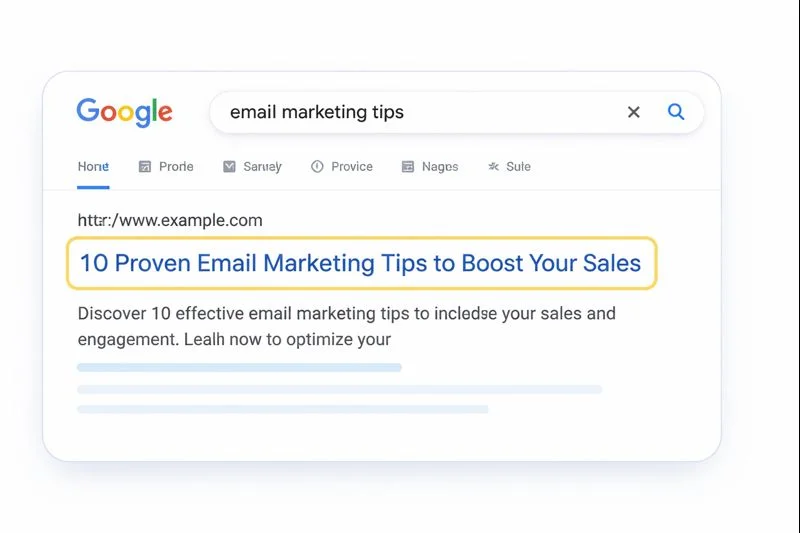
When it comes to SEO, every word counts, but so does length. Titles that are too long get cut off in search results. Google typically displays 50-60 characters of a title before it’s truncated. If your title exceeds this, you might miss out on valuable clicks.
Keeping your title short isn’t just for Google’s benefit; it also helps with readability. A title that’s easy to digest is more likely to grab attention. Aim for a title that’s under 60 characters, and you’ll ensure it shows up fully in search results.
But remember, the goal isn’t to just keep it short—it’s to keep it meaningful. It’s better to have a concise, relevant title than one that’s too short and lacks context.
Avoid Keyword Stuffing
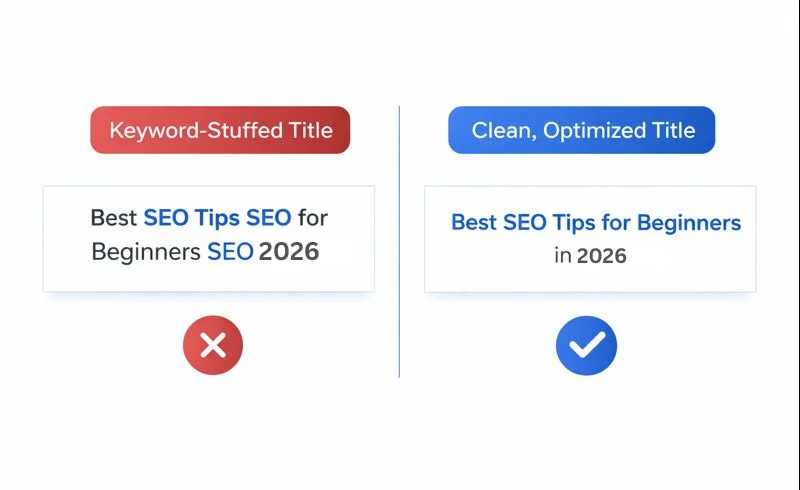
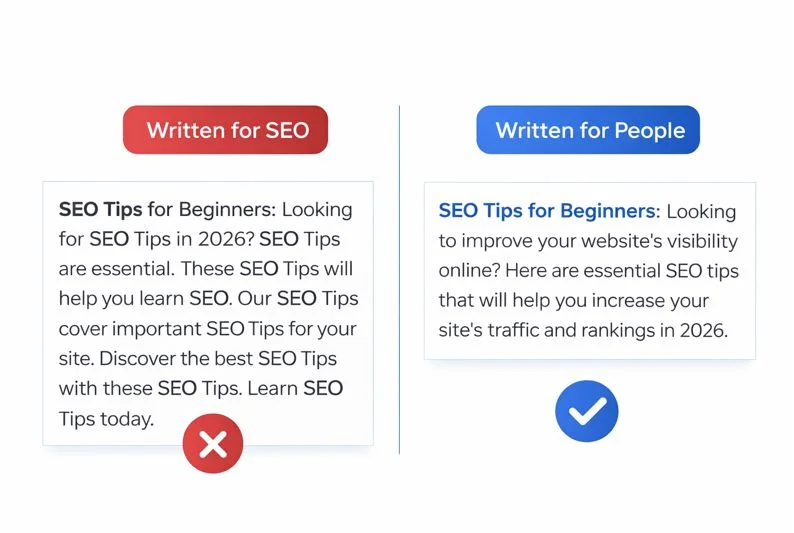
You’ve probably heard this one before, but it’s worth repeating: don’t stuff your titles with keywords. While it’s tempting to load up your title with as many keywords as possible, this will hurt your SEO more than it helps. Google can tell when a title is stuffed, and it’ll penalize you for it.
The key is to use your target keyword naturally. For example, instead of writing a title like “Best SEO Tips SEO for Beginners SEO 2026,” you should aim for something like “Best SEO Tips for Beginners in 2026.” It’s clean, readable, and still includes the target keyword. Google values user experience, so always put readability and clarity above keyword stuffing.
Create a Sense of Urgency or Value
Words like “How to,” “Ultimate,” and “Best” can make a big difference in how your title performs. They immediately signal value to your audience. People want to know that what they’re clicking on will solve their problems. Titles that imply a benefit tend to get clicked more.
For instance, “How to Rank #1 on Google in 30 Days” is more likely to grab attention than “SEO Tips for 2026.” Adding words like “how to” or “best” creates a sense of urgency and indicates that the content will provide real, actionable value.
Use Power Words, But Don’t Overdo It
Power words are words that trigger emotion or action. Words like “quick,” “easy,” “best,” or “ultimate” can help make your title more compelling. But remember, don’t go overboard. You want your title to sound authentic, not like an advertisement.
For example, “The Ultimate Guide to Mastering SEO” sounds great because it implies a complete and useful resource, but if you wrote “The Ultimate, Best, Top SEO Guide for 2026,” it might seem overhyped. Always make sure your titles are honest and reflect the true value of your content.
Use Numbers and Lists
Including numbers in your title can make it stand out. Lists are easy to digest, and titles that include numbers tell readers exactly what they’re going to get. Numbers also signal that your content is actionable, making it more appealing.
For example, “7 Easy Ways to Improve Your SEO Rankings” works well because it sets clear expectations. Numbers like “10,” “5,” or “7” in your title tell readers they’ll get a structured list of actionable tips. These kinds of titles tend to perform well in search results.
Write for People, Not Just Search Engines
It’s tempting to optimize your title purely for search engines, but don’t forget your audience. While Google’s algorithms are important, your content should first and foremost cater to readers. Craft titles that appeal to their needs and search intent.
Imagine you’re the reader. What would you want to click on? What problem does your content solve? Put yourself in your audience’s shoes, and think about what would make them want to click. Craft your titles with this in mind, and you’ll see better results.
How Do You Know If Your Title Will Rank?
I know you might be wondering: “How can I be sure my title will actually rank?” The truth is, there’s no magic formula, but you can still check a few things. First, use keyword research tools to ensure the keywords in your title are relevant and have search volume. Also, check out your competition. What titles are ranking for your target keywords? This will give you an idea of what works.
Second, focus on search intent. If your title matches what people are actually searching for, you’re in a better position to rank. For instance, if people are searching for “best SEO tips for beginners,” make sure your title includes this phrase.
Lastly, make sure your content delivers what your title promises. If you write an engaging, informative post that answers the question your title suggests, you’re more likely to see positive results.
Try Our SEO Title Generator Tool
Want to save time and improve your titles? Use our SEO Title Generator Tool to quickly create SEO-friendly titles tailored to your content. Whether you’re struggling to find the right keywords or you need help making your title more clickable, this tool is here to help you optimize and rank. Give it a try and start creating titles that work for both Google and your audience today!
Final Thoughts on Writing SEO-Friendly Titles
Writing SEO-friendly titles isn’t just about using keywords. It’s about being specific, clear, and honest about what your content offers. A great title is one that matches search intent, includes a relevant keyword, and speaks directly to your audience. When you get the title right, you set yourself up for success. Start with these best practices, and you’ll be on your way to writing titles that rank and attract clicks.