

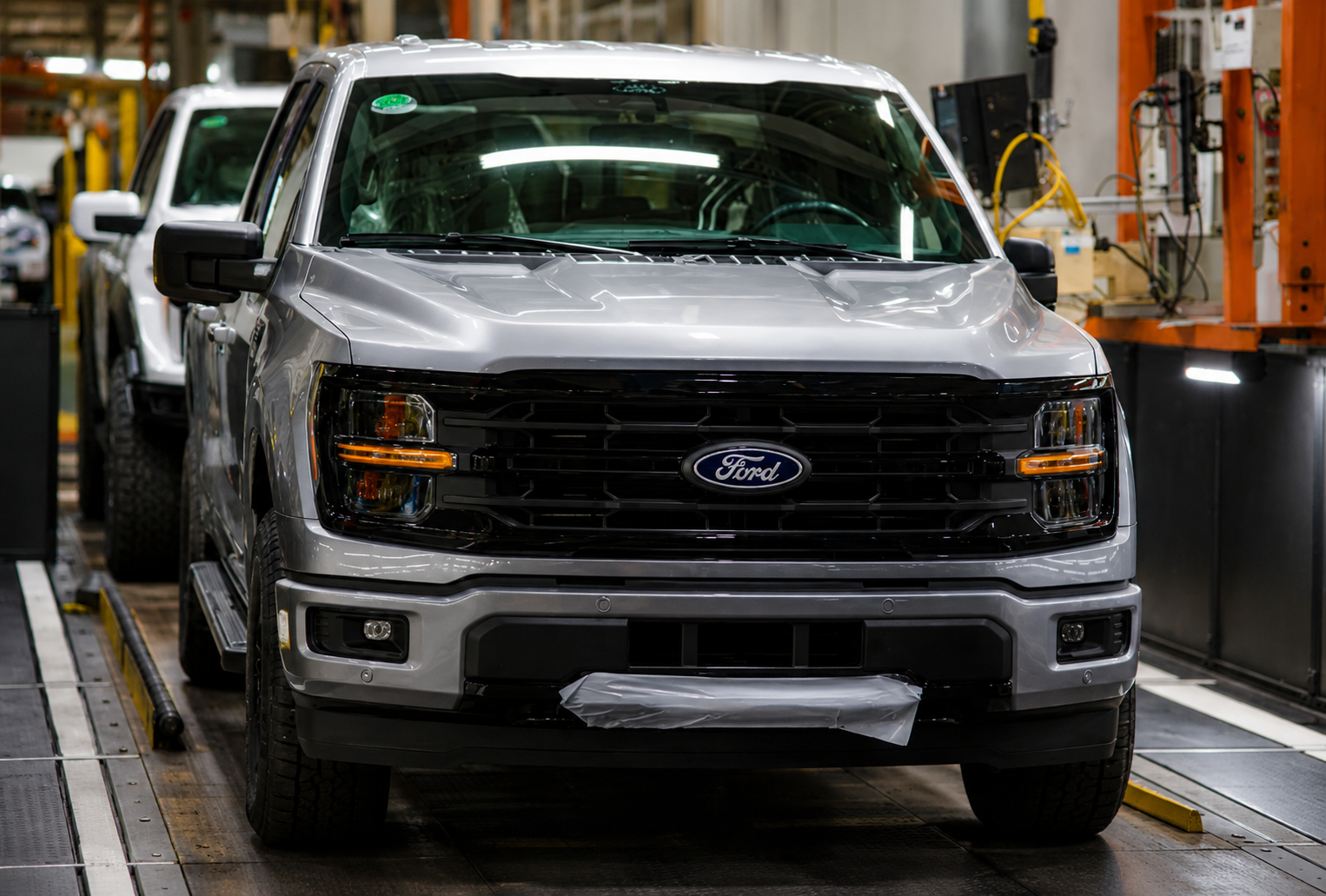
Ford AI Quality Checks Fall Short of Expectations
Ford AI Quality Checks have failed to deliver the level of accuracy and reliability the company expected, leading the automaker to bring back experienced engineers to strengthen its vehicle inspection process.Ford had invested heavily in artificial intelligence to improve manufacturing efficiency, reduce production costs, and identify quality issues during vehicle assembly. However, company executives now admit that AI alone could not replace the knowledge and expertise of experienced engineers.The decision highlights the continuing importance of human skills, even as AI becomes more common across the automotive industry.
Ford Expands AI Across Manufacturing Operations
Over the past few years, Ford AI Quality Checks became a major part of the company’s manufacturing strategy.Ford introduced approximately 900 AI-powered cameras across its production plants to identify manufacturing defects, monitor vehicle quality, and reduce supply chain disruptions.Executives believed artificial intelligence would improve productivity while helping deliver higher-quality vehicles to customers.However, real-world performance showed that automated systems still had important limitations.
Experienced Engineers Return to Ford
Following disappointing results from Ford AI Quality Checks, the company rehired more than 300 veteran quality engineers and inspectors.According to Ford executives, these experienced professionals possess decades of practical knowledge gained through multiple vehicle development cycles.Rather than replacing AI, these engineers are now helping improve the technology by training machine-learning systems and mentoring younger employees.Ford says combining human expertise with artificial intelligence is producing better quality results than relying on automation alone.
Why AI Failed to Match Human Experience
Ford acknowledged that Ford AI Quality Checks struggled because artificial intelligence depends entirely on the quality of the data used during training.Although AI can quickly analyze large amounts of information, it cannot automatically develop the judgment and experience gained by engineers who have spent years solving manufacturing problems.Company leaders admitted they underestimated the value of experienced employees whose practical knowledge could have improved AI systems from the beginning.As a result, Ford is now using veteran engineers to teach AI systems how to recognize more complex manufacturing defects.
Ford Focuses on Better Vehicle Quality
Ford says improving Ford AI Quality Checks has already contributed to better manufacturing performance.The company recently returned to the top position in the JD Power Initial Quality Study, an industry benchmark that measures the quality of newly manufactured vehicles.Ford described the achievement as the result of major improvements across engineering, manufacturing, leadership, and quality control.The company believes combining advanced AI technology with experienced engineers has strengthened its overall production process.
Human Expertise Remains Essential
Ford’s experience demonstrates that Ford AI Quality Checks work best when artificial intelligence supports human workers rather than replacing them.Experienced engineers continue to play a critical role in identifying complex manufacturing issues, improving product quality, and training AI systems to make better decisions.Industry analysts say many companies are reaching a similar conclusion as AI becomes more widely adopted across manufacturing and engineering sectors.
The Future of AI in Manufacturing
Although Ford AI Quality Checks initially fell short of expectations, the company remains committed to expanding artificial intelligence throughout its operations.Executives believe AI will continue improving manufacturing efficiency, but only when supported by experienced professionals who understand vehicle design and production.Rather than replacing skilled workers, Ford now sees AI as a tool that enhances human expertise instead of eliminating it.
Conclusion
The challenges faced by Ford AI Quality Checks show that artificial intelligence still cannot fully replace experienced engineers in complex manufacturing environments. By rehiring more than 300 veteran inspectors, Ford has reinforced the value of human knowledge while continuing to invest in AI technology. The company’s latest approach combines advanced automation with decades of engineering experience to improve vehicle quality and manufacturing performance.