

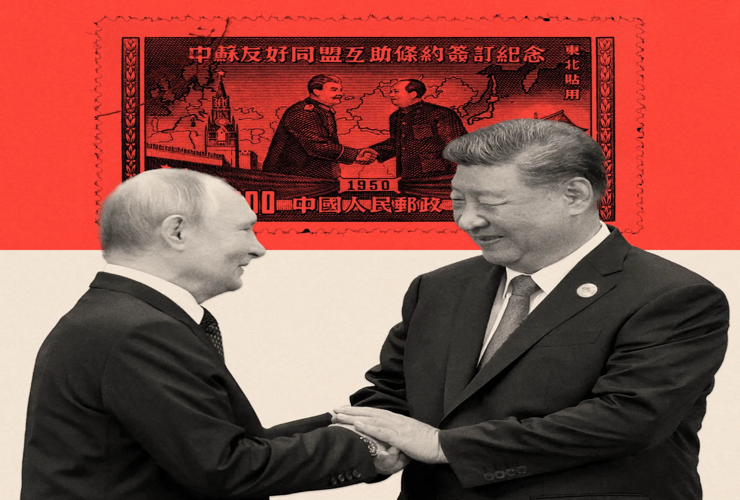
Xi Jinping and Vladimir Putin’s Strategic Partnership
The China and Russia relationship has become one of the most influential geopolitical partnerships in the modern world. Chinese President Xi Jinping and Russian President Vladimir Putin continue to strengthen cooperation in trade, energy, military strategy, and global politics while challenging Western influence.China and Russia often describe their connection as a “friendship with no limits.” Although the phrase suggests complete unity, many experts believe the partnership is mainly driven by strategic interests, economic cooperation, and political convenience rather than deep personal trust.During previous meetings in Beijing, Xi Jinping and Vladimir Putin were seen discussing future technologies, healthcare advancements, and global political changes. Their long-term partnership has helped shape the modern balance of power between East and West.
Putin’s Beijing Visit Highlights Strong Ties
Russian President Vladimir Putin is expected to visit Beijing again as China and Russia celebrate the 25th anniversary of their Treaty of Good-Neighbourliness and Friendly Cooperation.Unlike the grand public ceremonies organized for Western leaders, Putin’s visit is expected to focus mainly on strategic planning, economic cooperation, and regional security discussions.Chinese officials reportedly remain highly interested in developments involving the United States and its relations with both Moscow and Beijing. This reflects how closely China and Russia monitor Western foreign policy decisions and global power shifts.
China Holds the Economic Advantage
Although both countries publicly describe themselves as equal partners, China clearly holds greater economic power in the China and Russia relationship.China is Russia’s largest trading partner, while Russia represents only a small percentage of China’s total global trade. Since Western sanctions were imposed over the Ukraine conflict, Russia has become increasingly dependent on Chinese investment, technology, and industrial support.Chinese companies such as Huawei have expanded rapidly across Russia after many Western businesses exited the Russian market. Chinese smartphones, electronics, vehicles, and industrial products are now widely available throughout Russian cities.Reports also suggest that Russia imports a large amount of sanctioned industrial equipment and technology components from China. This growing dependence has strengthened Beijing’s influence over Moscow in recent years.
Russia Does Not Want to Become a Junior Partner
Despite its economic dependence on China, Russia continues to protect its image as an independent global power.Russian officials strongly reject claims that Moscow is becoming subordinate to Beijing. Political analysts believe the Kremlin remains highly sensitive about appearing weak or overly dependent on another nation.At the same time, China avoids publicly pressuring Russia because Beijing understands how strongly Moscow values national pride and strategic independence. Experts believe China prefers using quiet influence and long-term patience rather than open dominance.
Energy Cooperation Strengthens the Partnership
Energy cooperation remains one of the strongest foundations of the China and Russia relationship. Russia supplies China with massive amounts of oil, natural gas, and raw materials that are critical for China’s economic growth and energy security. One of the most important projects under discussion is the Power of Siberia 2 gas pipeline.If completed, the pipeline would transport billions of cubic metres of Russian gas to China through Mongolia. The project would deepen economic cooperation while helping Russia replace lost European energy markets.China views Russian energy supplies as increasingly important during a period of global instability, rising geopolitical tensions, and uncertainty in the Middle East.
Military Cooperation and Lessons From Ukraine
Russia’s war in Ukraine has also made Moscow strategically important for Beijing. China is believed to be carefully studying Russia’s military experience, sanctions challenges, and battlefield strategies. Analysts say Beijing could use some of these lessons while evaluating future military scenarios involving Taiwan.Russia also continues to provide military technology and defense expertise that China still values in certain sectors.Although China has avoided openly supporting Russia’s military campaign, both countries continue expanding joint military exercises and strategic defense cooperation.
China and Russia Are Not Formal Military Allies
Despite their close partnership, China and Russia are not officially bound by a military alliance like NATO.Instead, both countries maintain what experts describe as a flexible strategic partnership. This allows China and Russia to cooperate where their interests align without forcing either country into automatic military obligations during every conflict or crisis.Both governments strongly oppose what they describe as Western dominance in international politics. China and Russia frequently coordinate positions at the United Nations and avoid criticizing each other over controversial domestic issues. Beijing has offered diplomatic support to Moscow regarding Ukraine, while Russia has publicly backed China on matters involving Taiwan and Xinjiang.
Different Approaches Toward the West
Although China and Russia often stand together politically, their strategies toward the West are not always identical.Russia has become increasingly confrontational toward the United States and Europe. China, however, usually prefers a more cautious and long-term strategy focused on economic growth, international trade, and global investment.Beijing continues maintaining communication with Western countries while trying to balance geopolitical rivalry with economic stability. This difference highlights the unique priorities of each nation within the partnership.
Growing Social and Economic Connections
Relations between ordinary Chinese and Russian citizens are also becoming stronger. Visa-free travel arrangements have made tourism, business, and education easier between the two countries. Academic exchanges and joint research projects continue to increase cooperation between universities and institutions.Western sanctions and trade restrictions have also encouraged many Russian businesses and consumers to rely more heavily on China for products, technology, and international partnerships.
Why the China and Russia Relationship Will Continue
Despite economic imbalances and political differences, most experts believe the China and Russia relationship will remain strong for many years.Both countries benefit strategically from close cooperation during a time of rising tensions with the West. China gains energy security and diplomatic support, while Russia receives economic stability and access to technology and global markets.Although the partnership may not be based entirely on trust or friendship, it has become too important for either side to abandon easily.
Conclusion
The China and Russia relationship is built on shared strategic interests, economic cooperation, energy security, and opposition to Western influence. While China holds greater economic power and Russia seeks to maintain its independence, both nations continue to strengthen ties in ways that reshape global politics.As tensions between major world powers continue to rise, the partnership between Beijing and Moscow is likely to remain one of the most important geopolitical alliances of the 21st century.
Read the Full BBC Report: BBC News Report