

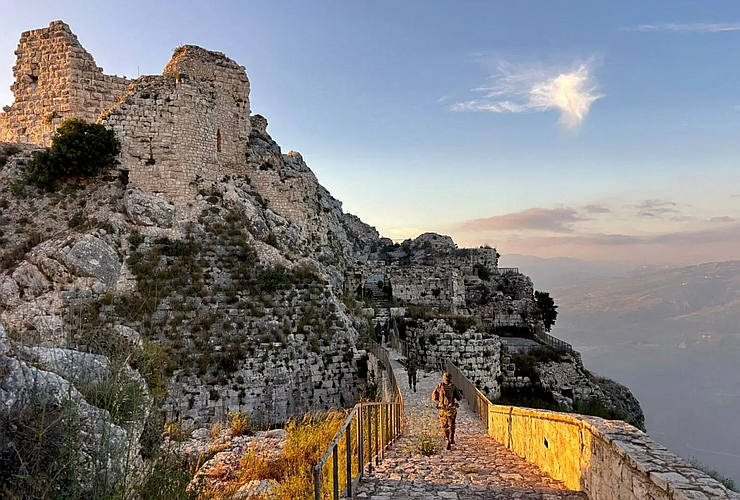
Israeli Forces Capture Historic Beaufort Castle
Israel Seizes Beaufort Castle in southern Lebanon as part of its expanding military offensive against Hezbollah. The historic fortress, which overlooks the Litani Valley, is considered one of the most strategic locations in southern Lebanon. Israeli Prime Minister Benjamin Netanyahu described the operation as a “decisive shift” in Israel’s military campaign, saying the capture demonstrates Israel’s determination to expand its control over areas previously dominated by Hezbollah.
Strategic Importance of Beaufort Castle
Beaufort Castle has played a crucial military role for centuries. Built by Crusaders nearly 900 years ago, the fortress offers a commanding view of southern Lebanon and surrounding border regions. Israel first captured the castle during the 1982 Lebanon War and maintained control of the area until withdrawing from southern Lebanon in 2000. The latest operation marks Israel’s return to one of the most symbolic military positions in the region.Defense Minister Israel Katz said the capture of the castle strengthens Israel’s defensive capabilities and improves security for communities located near the Lebanese border.
Israeli Ground Offensive Moves Deeper into Lebanon
Following the capture of Beaufort Castle, Israeli ground forces continued advancing deeper into Lebanese territory beyond the Litani River.The Israel Defense Forces (IDF) issued new evacuation warnings for civilians living across large parts of southern Lebanon. Military officials warned residents to leave areas near Hezbollah facilities, weapons depots, and military positions. According to the IDF, a significant number of troops are involved in the operation, which is expected to expand into additional locations in the coming days.
International Leaders Criticize Escalation
The growing military campaign has sparked criticism from several European nations. UK Foreign Secretary Yvette Cooper urged both Israel and Hezbollah to halt hostilities, stating that the conflict has resulted in civilian casualties, displacement, and widespread infrastructure damage. French President Emmanuel Macron also called for an immediate end to the fighting, while Germany expressed concerns that further escalation could worsen the humanitarian situation and trigger additional displacement across Lebanon. France has requested a United Nations Security Council meeting to discuss the ongoing conflict and its regional implications.
Lebanon Accuses Israel of Collective Punishment
Lebanese Prime Minister Nawaf Salam condemned the military operation, accusing Israel of carrying out collective punishment against civilians in southern Lebanon.Salam claimed that Israeli actions were causing significant destruction to homes, infrastructure, and public facilities. Lebanese officials have repeatedly called for international intervention to prevent further escalation.
Hezbollah and Israel Continue Exchanging Attacks
Israel says its military operations are a response to increased Hezbollah drone and missile attacks targeting Israeli troops and border communities.Hezbollah has continued launching projectiles into northern Israel, while Israeli forces have intensified airstrikes and ground operations inside Lebanon.Lebanon’s Health Ministry reported that an airstrike near Hiram Hospital in the city of Tyre injured several medical staff members and caused extensive damage to nearby facilities. The Israeli military also confirmed the death of another soldier during recent combat operations.
Ceasefire Agreement Near Collapse
Both Israel and Lebanon accuse each other of violating the temporary ceasefire agreement that came into effect last month. Israeli officials argue that Hezbollah’s continued attacks breach the agreement, while Lebanese authorities maintain that Israeli airstrikes and military advances violate the terms of the ceasefire.Despite rising tensions, negotiators from both countries are expected to participate in another round of talks in Washington aimed at preventing a wider regional conflict.
Regional Conflict Continues to Grow
The confrontation between Israel and Hezbollah remains closely linked to the broader conflict involving Iran and its regional allies.Since the latest escalation began, Lebanese authorities report that more than 3,300 people have been killed, while Israel has recorded dozens of military casualties. As diplomatic efforts continue, concerns remain that further fighting could destabilize the Middle East and worsen the humanitarian crisis in Lebanon.