

US Insists Strait of Hormuz Is Open Despite Renewed Iran Strikes
The US Iran Strait of Hormuz strikes have pushed tensions in the Gulf region higher once again after both countries exchanged fresh military attacks over the weekend. While Iran announced that it had closed the strategically important Strait of Hormuz until further notice, the United States rejected that claim and insisted the waterway remains open for international shipping under the protection of American forces.The renewed fighting has placed the fragile ceasefire agreement signed last month under severe pressure and raised concerns among governments, shipping companies and global energy markets.
US Says Strait of Hormuz Remains Open
US officials maintained that commercial vessels continue to have access to the Strait of Hormuz despite Iran’s announcement that it had suspended maritime traffic through the waterway.The United States said its military presence in the Gulf would continue ensuring freedom of navigation and protecting international shipping routes.According to US Central Command (Centcom), additional military operations were launched on Sunday evening targeting Iranian military infrastructure. Officials said the strikes were intended to reduce Iran’s capability to attack civilian shipping and commercial vessels travelling through the Strait of Hormuz.American military officials stressed that the international shipping lane remains operational despite the latest escalation.
Iran Announces Closure of the Strait
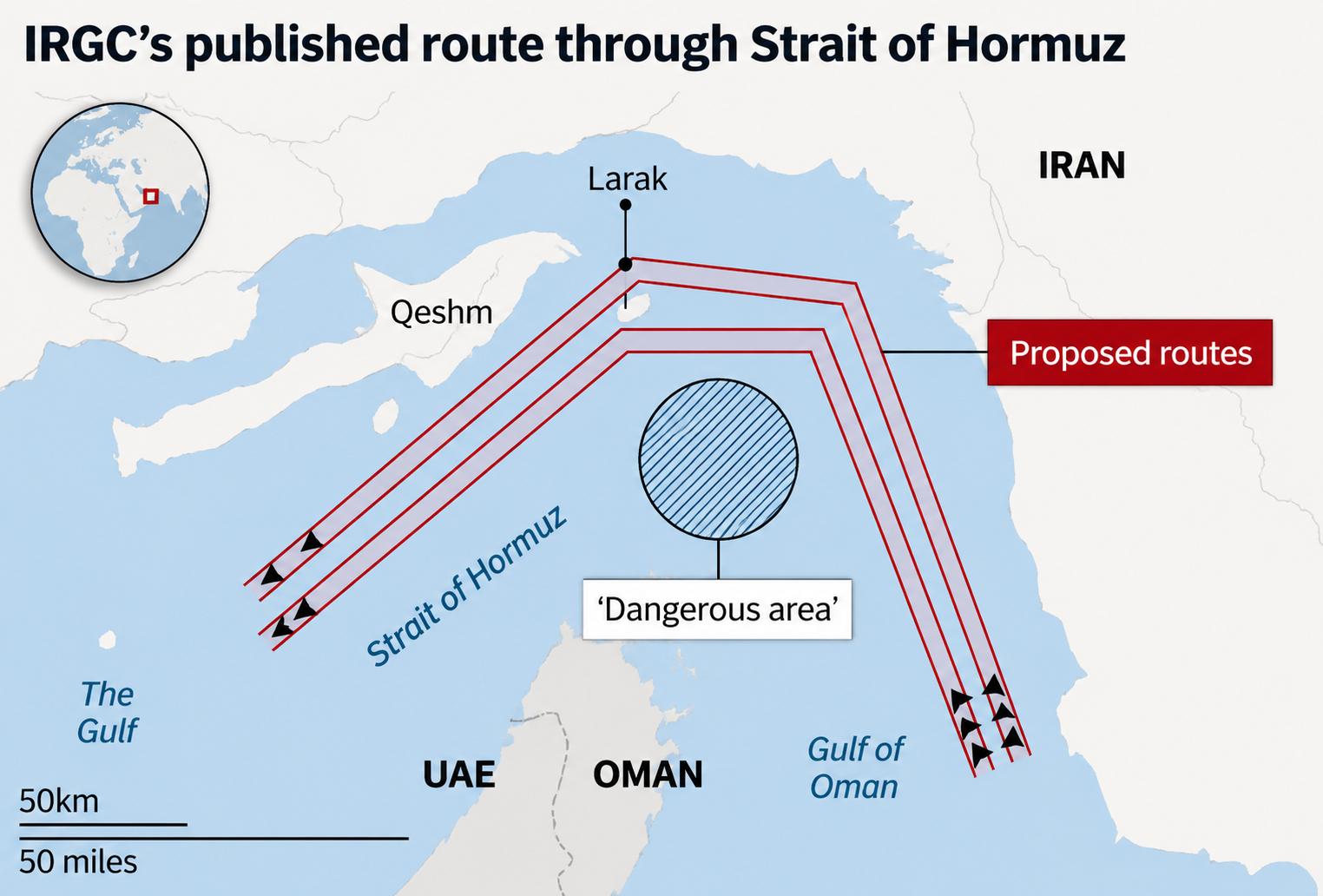
Iran presented a very different position.Early Sunday, Iranian authorities declared that the Strait of Hormuz had been closed until further notice as military operations continued throughout the Gulf.Iran has increasingly sought greater control over navigation through the strategic waterway, arguing that vessels must comply with Iranian maritime regulations while travelling through the region.Officials in Tehran described the latest measures as part of their efforts to safeguard national security following recent American attacks.The announcement immediately raised concerns because nearly one-fifth of the world’s oil supply normally passes through the Strait of Hormuz.
Fresh Military Strikes Escalate the Conflict
The latest confrontation followed extensive American air strikes across Iran.
US Central Command said it had attacked more than 140 military targets, including:
- Missile launch sites
- Drone facilities
- Coastal surveillance systems
- Communications infrastructure
- Military command centres
According to US officials, these operations were launched after Iranian forces attacked a commercial vessel travelling through what Tehran described as an “unapproved route.”The United States accused Iran of deliberately targeting civilian maritime traffic and said the strikes were necessary to maintain security in international waters.Iran confirmed that several coastal military facilities had been hit during the American operation.
Iran Launches Retaliatory Strikes Across the Region
Iran responded quickly to the latest American attacks by launching what it described as the first phase of retaliatory operations against US military facilities and allied positions across the Middle East.The Islamic Revolutionary Guard Corps (IRGC) announced that missiles and drones had targeted the Prince Hassan Air Base in Jordan, claiming the attack damaged the base’s command centre along with MQ-9 drone facilities.Meanwhile, several Gulf countries reported incoming missile and drone threats. Governments in the United Arab Emirates (UAE), Qatar, Kuwait, Oman, and Bahrain confirmed that they had activated air defence systems after detecting Iranian projectiles entering regional airspace.The BBC said it had contacted US Central Command for confirmation regarding the reported strike in Jordan, but there was no immediate official response.
Attacks Raise Pressure on Gulf Allies
The latest wave of attacks marked a significant escalation compared with previous months.Qatar had not faced direct military attacks since April, while the UAE had remained largely untouched since May. The renewed strikes therefore represented a major expansion of the conflict and highlighted growing regional instability.Several Gulf governments reiterated their commitment to protecting national security while continuing diplomatic efforts aimed at preventing a wider regional war.
Shipping Incident Triggers New Fighting
According to US Central Command, the latest military exchange began after Iran allegedly attacked a Cyprus-flagged commercial vessel travelling through the Strait of Hormuz.American officials said the vessel suffered serious engine-room damage after being struck and was unable to continue its voyage.Centcom also reported that one crew member aboard the MV GFS Galaxy was missing following the incident.The UK’s Maritime Trade Operations (UKMTO) later stated that military authorities informed them the crew had abandoned the damaged vessel and escaped using lifeboats.Iran, however, argued that the ship had travelled along an unauthorised maritime route, accusing it of violating navigation procedures established by Iranian authorities.
Ceasefire Agreement Faces Fresh Uncertainty
The renewed US Iran Strait of Hormuz strikes have placed the interim ceasefire agreement signed last month under severe strain.The agreement had been designed to reduce military tensions, reopen maritime traffic through the Strait of Hormuz, and create a framework for broader diplomatic negotiations between Washington and Tehran.Earlier in the week, US President Donald Trump declared that Iranian attacks meant the ceasefire had effectively collapsed.Iranian Foreign Minister Abbas Araghchi responded by accusing Washington of violating the agreement through continued military operations.Despite the renewed violence, American officials indicated that diplomatic discussions had not been abandoned. Mediators are reportedly continuing efforts to revive negotiations and prevent the conflict from escalating further.
Iran Claims Earlier Tanker Attack Was a Mistake
US media reports suggested Iranian officials privately informed American negotiators that attacks on commercial tankers earlier in the week had not been authorised by senior leadership.According to those reports, Tehran blamed a rogue internal faction for the incident.Neither government has officially confirmed those discussions, but the reports suggest diplomatic communication between both sides has continued despite the ongoing military confrontation.
Regional Security Concerns Continue to Grow
The Strait of Hormuz remains one of the world’s most strategically important maritime routes, carrying a significant share of global oil exports every day.Any disruption to shipping through the narrow waterway has the potential to affect international energy markets, commercial trade, and global economic stability.The latest military exchanges have therefore drawn close attention from governments, shipping companies, and international security organisations monitoring developments across the Gulf.
Conclusion
The latest US Iran Strait of Hormuz strikes represent another dangerous escalation in an already fragile regional conflict. While the United States insists that the Strait of Hormuz remains open and protected by its military forces, Iran continues to assert greater control over the strategic waterway and has responded with missile and drone attacks against US positions and regional allies.Although both countries continue to signal a willingness to pursue diplomatic negotiations, repeated military exchanges have placed the interim ceasefire agreement under increasing pressure. With commercial shipping, regional security, and global energy supplies all at stake, the coming weeks will be critical in determining whether diplomacy can prevent the conflict from expanding into a broader regional crisis.