

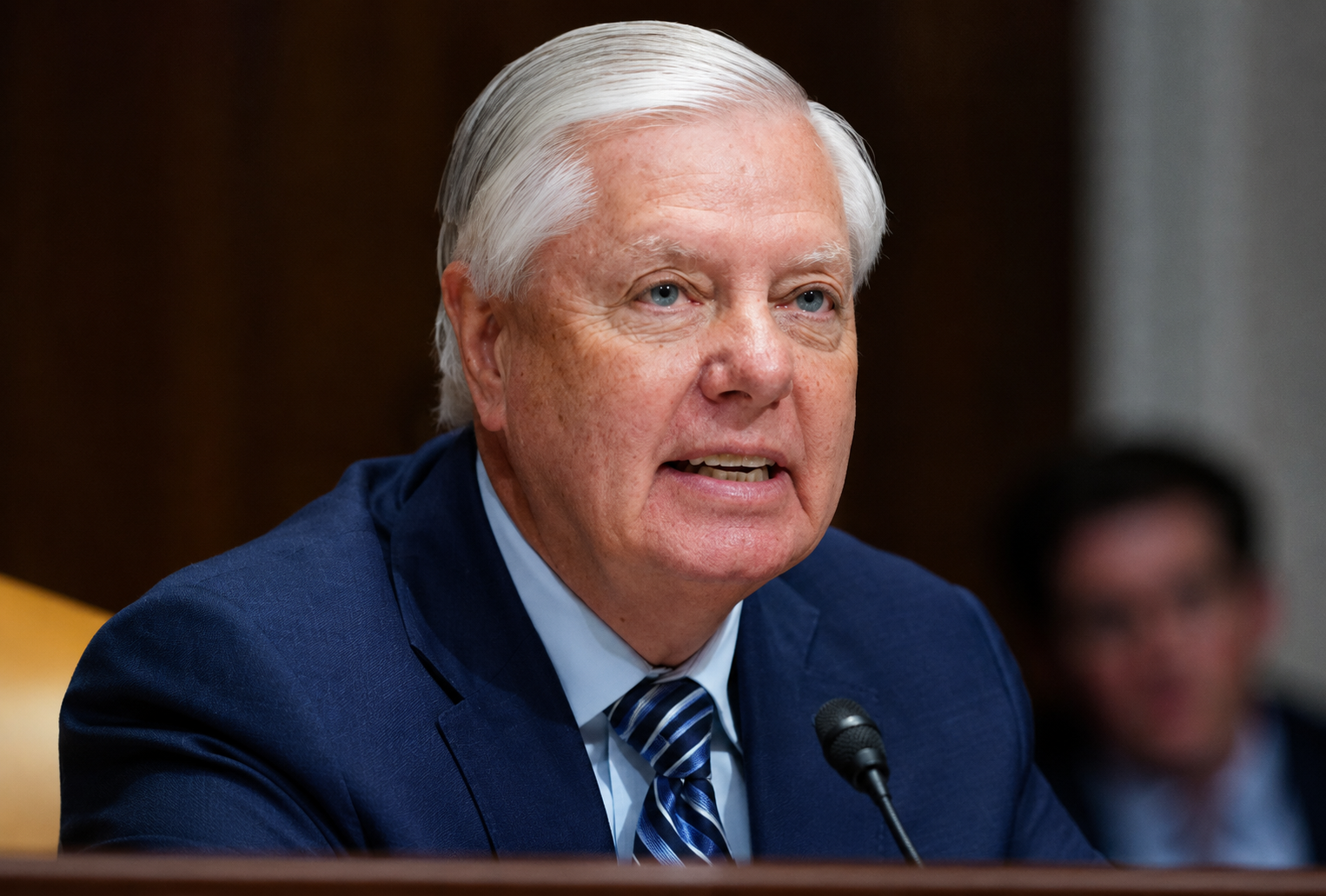
US Senator and Trump Ally Lindsey Graham Dies After Brief and Sudden Illness
Republican Senator Lindsey Graham dies at the age of 71 following what his office described as a brief and sudden illness, bringing an end to one of the most influential political careers in modern American politics. The South Carolina senator, known for his outspoken positions on national security and foreign affairs, passed away on Saturday evening, leaving colleagues across both political parties mourning the loss of a veteran lawmaker.According to a statement released by his office, preliminary findings from the medical examiner indicate that the cause of death was a rupture of the aorta, one of the body’s main arteries responsible for carrying blood from the heart. Officials added that there had been no publicly known health concerns before his death.The news came as a shock in Washington because Graham had only recently returned from an official visit to Kyiv, where he met Ukrainian President Volodymyr Zelensky to reaffirm American support for Ukraine amid its ongoing conflict with Russia. Those who met him during the visit said he appeared active and fully engaged in diplomatic discussions.US President Donald Trump, who had developed a close political relationship with Graham over recent years, paid tribute to the senator shortly after news of his death became public. Trump described Graham as a “true American patriot” who dedicated decades of his life to serving the United States.Speaking to American media, Trump revealed that he had spoken with Graham only hours before his passing.
He sounded great Trump said, adding that although Graham appeared slightly tired after travelling, nothing suggested a serious medical emergency.
The president praised Graham’s determination and political toughness, saying he never backed away from difficult battles if he believed he was defending America’s interests.
A Career That Shaped American Foreign Policy
For more than two decades, Lindsey Graham remained one of the Republican Party’s most influential voices on defence, military affairs and international relations.After being elected to the US Senate in 2002, he quickly earned a reputation as a senator willing to advocate for strong American military engagement overseas. Whether discussing the wars in Iraq and Afghanistan, sanctions against hostile governments or increased defence spending, Graham consistently argued that US global leadership depended on maintaining military strength.Throughout his Senate career, he served on several powerful committees dealing with judicial affairs, national security and defence policy. His opinions often carried significant influence within Republican circles, particularly on matters involving international conflicts.Many colleagues described him as a senator who was deeply involved in foreign policy and regularly travelled abroad to meet world leaders and American military personnel.
From Trump Critic to One of His Closest Allies
One of the most remarkable chapters of Graham’s political career was his changing relationship with Donald Trump.During the 2016 Republican presidential campaign, Graham openly criticised Trump, warning that nominating him would damage the Republican Party. He famously referred to Trump using harsh language and questioned whether he possessed the temperament required to become president.Following the attack on the US Capitol in January 2021, Graham again distanced himself from Trump, declaring that enough was enough after years of political partnership.However, the relationship gradually changed over the following years.As Trump’s policies on immigration, conservative judicial appointments and national security gained support among Republican voters, Graham increasingly defended the president’s record. By the 2024 presidential election, he had become one of Trump’s strongest supporters in the Senate.Explaining his position during an earlier BBC interview, Graham acknowledged that while Trump remained a controversial figure, he believed many of the administration’s policies had benefited the United States.He frequently pointed to stricter border enforcement, the appointment of conservative federal judges and the operation that killed Iranian military commander Qasem Soleimani as achievements he supported.
Strong Support for Ukraine and Israel
Foreign policy remained Graham’s defining issue until the final days of his career.He was among the Senate’s most vocal advocates for continued American military assistance to Ukraine following Russia’s invasion. Graham repeatedly argued that supporting Kyiv was essential for protecting international stability and preventing future aggression in Europe.Only one day before his death, he met Ukrainian President Volodymyr Zelensky in Kyiv, reaffirming bipartisan support for Ukraine’s defence.
Following news of Graham’s passing, Zelensky expressed condolences, describing the senator as a determined leader who consistently stood beside Ukraine during one of the country’s most difficult periods.Similarly, Israeli Prime Minister Benjamin Netanyahu praised Graham’s longstanding commitment to Israel’s security, calling him one of the country’s closest friends in American politics.Graham also maintained a firm position on Iran, frequently supporting stronger sanctions and warning against threats to international shipping routes in the Middle East. In one of his final televised interviews, he argued that the United States should respond forcefully if Iran challenged freedom of navigation in the Strait of Hormuz.
Early Life and Personal Challenges
Before entering national politics, Lindsey Graham experienced profound personal hardship that shaped his character and public service. While studying at the University of South Carolina, he lost both of his parents within a short period. The tragedy forced him to put aside many of his own ambitions to care for his younger sister, whom he later legally adopted and helped raise.Those close to Graham often said these experiences instilled a strong sense of responsibility and resilience that remained evident throughout his political career. Despite the personal setbacks, he completed his education, earned a law degree, and began a career dedicated to public service.
Military Service Before Politics
Prior to joining Congress, Graham served in the United States Air Force as a military lawyer. Working as both a prosecutor and defence attorney, he gained experience in military justice and national security matters.His military background strongly influenced his views on defence policy throughout his Senate career. Graham consistently argued that the United States should maintain a strong military presence around the world and remain prepared to confront international threats.After leaving active duty, he continued serving in the Air Force Reserve while building his political career in South Carolina.
A Powerful Voice on National Security
Throughout more than two decades in the Senate, Graham became one of Washington’s most recognised foreign policy figures. He frequently supported military assistance to allies, stronger sanctions against hostile governments, and increased defence spending.He backed the invasion of Iraq following the September 11 terrorist attacks and later criticised the withdrawal of American troops from Afghanistan in 2021, arguing that it weakened US national security and encouraged extremist groups.In recent years, Graham remained outspoken on conflicts involving Ukraine, Israel and Iran. He consistently advocated continued military assistance to Ukraine and stronger support for Israel during periods of regional instability.Only weeks before his death, Graham warned that Iran should face severe consequences if it threatened international shipping routes or American interests in the Middle East.
Tributes From Around the World
Following confirmation that Lindsey Graham dies after a sudden illness, tributes poured in from political leaders across the United States and overseas.President Donald Trump remembered Graham as a loyal ally and dedicated public servant who never hesitated to defend what he believed was in America’s best interests.Israeli Prime Minister Benjamin Netanyahu described Graham as one of Israel’s closest friends in American politics, praising his decades of unwavering support for the country’s security.Ukrainian President Volodymyr Zelensky, who had met Graham only a day before his death, expressed deep sadness over the loss. He said the United States and the international community had lost a determined leader who consistently supported Ukraine during its war with Russia.Lawmakers from both Republican and Democratic parties also offered condolences, acknowledging Graham’s influence on national security debates even when they disagreed with his political positions.
Senate Vacancy and Political Impact
Graham’s death creates an important vacancy in the United States Senate at a critical political moment.Under South Carolina law, Governor Henry McMaster will appoint an interim senator to serve until voters elect a permanent replacement during the upcoming midterm elections.Before Graham’s passing, Republicans held a 53-47 majority in the Senate. Although the temporary appointment is expected to preserve that balance in the short term, the November election will become an important contest as both parties compete for control of the chamber.Political analysts believe Graham’s absence could also reshape Republican leadership on foreign policy, where he had long been one of the party’s most experienced and influential voices.
Legacy of Lindsey Graham
Whether admired or criticised, Lindsey Graham spent decades at the centre of American political life.His willingness to change political alliances, particularly his evolving relationship with Donald Trump, attracted both praise and criticism. Yet supporters argued that his decisions reflected changing political realities rather than personal ambition.His influence extended far beyond South Carolina. Graham helped shape debates on military intervention, judicial appointments, international diplomacy and national security for more than twenty years.His advocacy for Ukraine, Israel and a strong American military presence overseas became defining features of his Senate career.
Conclusion
The news that Lindsey Graham dies at the age of 71 marks the end of a significant chapter in modern American politics. From overcoming personal tragedy in his youth to becoming one of the United States Senate’s most recognised voices on foreign policy, Graham built a career that left a lasting impact on Washington and international affairs.His passing comes during a period of major geopolitical challenges, making his absence particularly significant for Republican leadership and US foreign policy discussions. As colleagues, allies and political opponents remember his decades of public service, attention will now turn to selecting his successor and assessing the lasting influence of one of America’s most prominent conservative lawmakers.