

“`html
Air India Crash Investigation: One Year Later, Key Questions Still Remain Unanswered
The Air India Crash Investigation continues more than a year after the tragic crash of Air India Flight AI171. Investigators are still working to determine what caused one of India’s worst aviation disasters. Although authorities have examined large amounts of technical evidence, they have not announced a definitive conclusion.
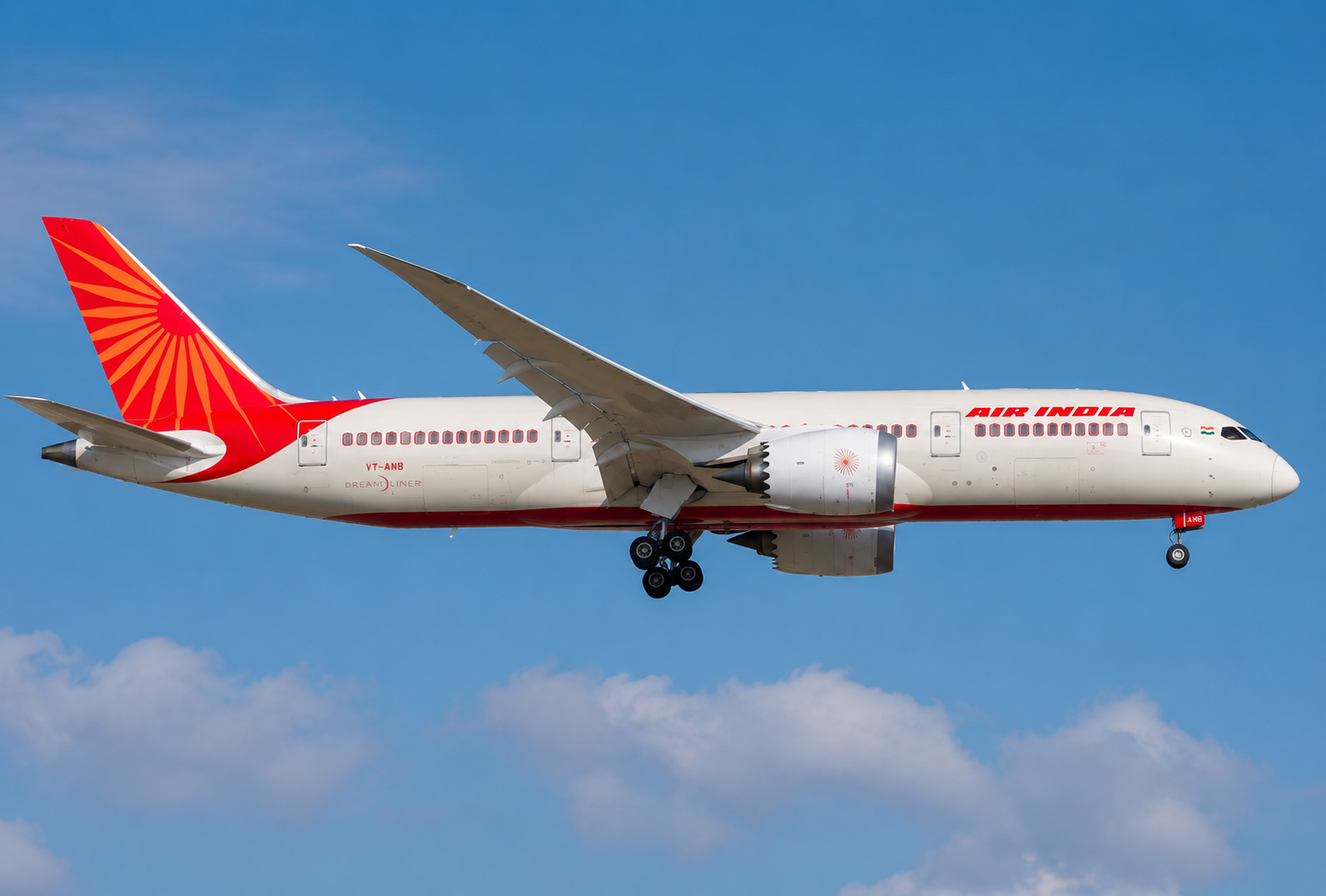
The accident occurred on 12 June 2025. Air India Flight AI171 was a Boeing 787 Dreamliner travelling from Ahmedabad to London. The aircraft crashed seconds after take-off. It struck a medical college complex before bursting into flames. The disaster killed 260 people, including passengers, crew members and people on the ground.
India’s Aircraft Accident Investigation Bureau (AAIB) confirmed that the investigation remains active. Officials provided an update on the first anniversary of the disaster. They said investigators are examining flight recorder data, aircraft systems, engine performance and maintenance records. Human factors also remain part of the investigation.
Investigation Continues Despite One Year of Analysis
The AAIB released a progress update about the investigation. Officials reported significant progress but said several important questions remain unanswered. Investigators are still reviewing critical evidence before reaching a final conclusion.
According to investigators, the following technical areas remain under examination:
- Flight Data Recorder (FDR)
- Cockpit Voice Recorder (CVR)
- Engine performance analysis
- Aircraft system functionality
- Aircraft maintenance history
- Crew training records
- Human factors investigation
Officials have stressed the importance of verifying every piece of evidence. They want to ensure that the final report contains accurate and reliable findings.
Preliminary Report Raised Important Questions
A preliminary investigation published shortly after the crash revealed an important finding. According to the report, both engine fuel-control switches unexpectedly moved into the “cut-off” position seconds after take-off.
This action stopped the fuel supply to both engines. As a result, the aircraft lost thrust while it was still climbing. The development raised serious questions about the events inside the cockpit.
Investigators also disclosed details from the cockpit audio recording. One pilot reportedly asked the other why the switches had moved. The second pilot replied that he had not moved them.
However, the AAIB did not identify either pilot in its preliminary findings. This decision left one of the investigation’s biggest questions unanswered.
Why the Crash Remains So Unusual
Aviation experts describe the accident as highly unusual. Serious crashes immediately after take-off are relatively rare. Take-off and landing are among the most critical phases of any flight. However, fatal accidents during the first few seconds after lift-off represent only a small share of commercial aviation incidents.
Industry data also shows that major jet accidents during the initial climb are uncommon. This makes the Air India Crash Investigation a technically complex aviation inquiry. Investigators must examine several possible explanations before determining what happened.
Why Has the Final Report Taken So Long?
Several aviation safety specialists believe the extended timeline reflects the complexity of the investigation. It does not necessarily indicate a single unresolved problem. Former airline pilot and aviation safety consultant John Cox explained that international aviation rules allow investigators additional time when they need to examine more evidence.
According to Cox, investigators must answer several important technical questions:
- Exactly when did both engines begin losing power?
- When did the fuel-control switches actually move?
- Did a technical malfunction occur before the loss of thrust?
- Did previous flights show similar system behaviour?
Investigators must resolve these questions before presenting their final findings. A complete technical analysis is essential to understanding the sequence of events.
Experts Believe Multiple Possibilities Are Still Being Examined
Former accident investigator Shawn Pruchnicki believes the continued delay suggests that investigators are comparing several possible explanations. Aviation accident investigations often require extensive testing. Specialists must examine different scenarios before identifying the most likely sequence of events.
Pruchnicki notes that a clear cause could have allowed investigators to publish their findings sooner. However, the investigation remains active. This suggests that specialists are still reviewing competing theories and technical evidence.
Debate Surrounding the Investigation Continues
Unlike many aviation investigations that focus mainly on technical findings, the Air India Crash Investigation has generated significant public debate. The preliminary report attracted international media attention. Some outlets suggested that the cockpit crew may have played a role because of the fuel-control switch findings.
These reports sparked criticism from several groups, including:
- Pilot associations
- Aviation safety experts
- Families of the flight crew
- Lawyers representing victims’ relatives
Critics argue that assigning responsibility before the investigation ends could damage public confidence. They also believe it could unfairly affect the people involved.
These groups have called for a balanced investigation. They want authorities to examine technical, mechanical and operational factors before reaching any conclusions.
Why the Fuel-Control Switches Remain the Biggest Mystery
Two cockpit fuel-control switches remain central to the Air India Crash Investigation. These switches regulate fuel flow to the aircraft’s engines. They also include protective locking mechanisms that help prevent accidental movement.
Pilots normally operate these switches during engine start-up, after landing or in certain emergency situations. Because of their safety features, experts consider simultaneous movement of both switches an important issue for investigators.
Former airline captain and aviation consultant John Cox reviewed the operational history of several Boeing aircraft families. These included the 757, 767, 777, 787 and 737 MAX. According to him, there has been no known case in hundreds of millions of flight hours where a switch malfunction alone caused an engine shutdown.
For this reason, investigators continue to examine the sequence of events. They want to determine whether the switch movement triggered the emergency. Another possibility is that the crew moved the switches while responding to an existing problem.
Were the Pilots Trying to Save the Aircraft?
Some aviation specialists believe the fuel-switch movement may not have caused the accident. Instead, they suggest it could have reflected an attempt by the crew to recover the aircraft.
Aviation analyst Simon Hradecky discussed Boeing’s emergency procedures for a dual-engine failure. According to his explanation, the procedure requires pilots to move the fuel-control switches to the “cut-off” position before returning them to “run” during an attempt to restart the engines.
If the engines had already started losing thrust because of another problem, the pilots may have been following an emergency checklist. Under this interpretation, the switch movement could represent a recovery attempt rather than the original cause of the power loss.
However, investigators have not confirmed either explanation. Both possibilities remain under examination.
The Ram Air Turbine Raises More Questions
Another important part of the Air India Crash Investigation involves the aircraft’s Ram Air Turbine (RAT). This emergency backup system provides limited power to essential flight systems. It can deploy when the aircraft loses normal electrical or hydraulic power.
According to the preliminary report, the RAT became operational seconds after the engines lost their fuel supply. However, some aviation specialists have raised questions about the reported timeline.
Some experts argue that simulator testing may show a different deployment sequence. This has encouraged investigators to examine whether the engines had already started losing power before the fuel-control switches moved.
The AAIB has not publicly commented on these technical questions. The investigation remains ongoing, and authorities continue to review the available evidence.
Did an Electrical Malfunction Play Any Role?
Some independent aviation researchers have suggested another possible explanation involving the aircraft’s electrical systems. One theory proposes that an unexpected electrical fault may have affected the flight computers during take-off. Researchers have also questioned whether such a fault could influence engine management systems.
Supporters of this theory believe investigators should examine whether a system malfunction occurred before the apparent fuel interruption. However, the preliminary report did not identify evidence of a major electrical failure.
Instead, investigators stated that the Boeing 787 held a valid airworthiness certificate. The aircraft had also met the required maintenance standards and completed its mandatory inspections before the accident.
At this stage, authorities have not confirmed any connection between the electrical systems and the crash. Further technical analysis will be necessary to examine this possibility.
Engine Performance Still Under Examination
Both General Electric GEnx engines had accumulated thousands of flight hours. Investigators noted that they remained within their certified operational lifespan. However, specialists continue to examine their performance because simultaneous engine failures are exceptionally rare in modern commercial aviation.
Investigators are analysing data from the aircraft’s Flight Data Recorder and engine monitoring systems. This analysis should help establish the exact sequence of events during the final seconds of flight.
Experts believe several technical details could provide important clues. These include engine temperature readings, fuel-flow data and thrust performance immediately before impact.
This detailed examination could help determine whether the engines began losing power before or after the fuel-control switches moved.
Cockpit Voice Recorder May Hold the Final Answers
Investigators have confirmed that they recovered the Cockpit Voice Recorder and transcribed its contents. However, authorities have made only a small portion of the cockpit conversation public.
Aviation experts believe the complete recording could provide important information about the aircraft’s final moments. Investigators can compare cockpit conversations with flight data to understand the sequence of events.
Until this analysis is complete, investigators have declined to speculate about responsibility. They have also avoided identifying individual actions that may have contributed to the accident.
Conclusion
More than a year after the tragedy, the Air India Crash Investigation remains one of the most closely watched aviation inquiries in recent history. Investigators have collected extensive technical evidence. However, several important questions remain unanswered.
These questions include the movement of the fuel-control switches, engine performance, emergency system activation and cockpit communications. Each detail could help explain what happened during the aircraft’s final moments.
Authorities have stressed that people should not draw final conclusions before the investigation ends. The final report is expected to explain the crash and may include safety recommendations to prevent similar accidents in the future.
Until then, investigators will continue examining the evidence. Families of the victims, aviation professionals and the wider public are waiting for definitive answers.
“`