

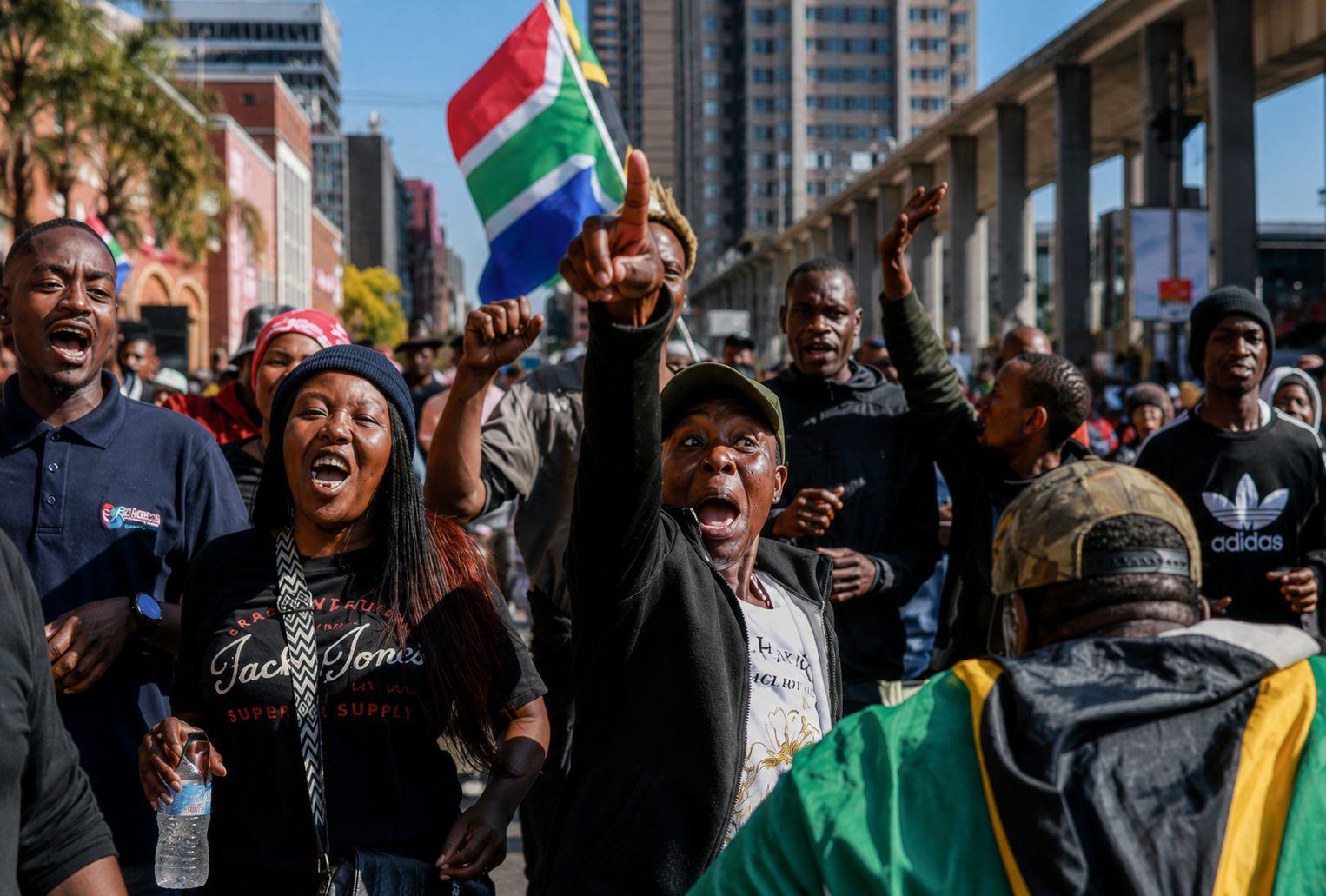
South Africa Anti-Migrant Protests Spread Across Major Cities
The South Africa Anti-Migrant Protests attracted thousands of demonstrators to major cities, where crowds demanded that undocumented migrants leave the country. Authorities deployed a large number of police officers, supported by private security personnel, to prevent violence and protect public safety.Although most demonstrations remained peaceful, officials reported isolated incidents of looting, property damage, and clashes between protesters and suspected foreign nationals.
Heavy Police and Security Presence
The South Africa Anti-Migrant Protests prompted a significant security response in Johannesburg, Durban, and other urban areas.Police confirmed that the military was placed on standby in parts of Johannesburg and Durban as a precaution. Law enforcement officers patrolled key streets while monitoring demonstrations throughout the day.Authorities stated that several arrests were made after incidents involving shootings, looting, intimidation, and attacks on businesses.
Violence Reported in Some Areas
While many demonstrations remained orderly, the South Africa Anti-Migrant Protests turned violent in certain neighborhoods.Police reported that armed suspects opened fire on protesters in Johannesburg, injuring two people before demonstrators set the suspects’ vehicle on fire.In other communities, protesters damaged homes they believed belonged to undocumented migrants, while several foreign-owned businesses were targeted during looting incidents.Law enforcement officials arrested multiple suspects connected to criminal activities during the demonstrations.
Thousands of Migrants Leaving South Africa
The ongoing South Africa Anti-Migrant Protests have encouraged many undocumented migrants to leave the country voluntarily.Police estimate that approximately 25,000 migrants have already been repatriated, with many returning to countries including Malawi, Nigeria, Zimbabwe, Mozambique, and Ghana.Temporary transit camps have been established to process people waiting for transportation home.Many migrants expressed sadness at leaving behind jobs, families, and communities they had built over many years.
Government Calls for Peace
President Cyril Ramaphosa appealed for calm ahead of the South Africa Anti-Migrant Protests, urging citizens to respect the law while expressing their concerns peacefully.He acknowledged the need for immigration reforms but emphasized that legally documented foreign nationals contribute positively to South African society through work, education, and business.The president warned that peaceful protest does not justify violence, intimidation, vandalism, or attacks on innocent people.
Protest Groups Demand Tougher Immigration Policies
Leaders of several organizations behind the South Africa Anti-Migrant Protests called for stronger enforcement of immigration laws.Some protest organizers announced plans to continue weekly demonstrations until the government removes undocumented migrants from the country.Participants argued that illegal immigration contributes to unemployment, crime, and pressure on public services.Police, however, stressed that immigration enforcement must remain within the law.
Economic Pressures Fuel Public Anger
South Africa continues to face unemployment levels exceeding 30%, contributing to growing public frustration over immigration.Many protesters believe undocumented migrants compete for limited employment opportunities and government resources.However, economists and human rights organizations warn that migration is only one part of broader economic challenges facing the country.
Migrants Share Their Experiences
Many migrants affected by the South Africa Anti-Migrant Protests described difficult decisions to leave the country.Several said they had worked in South Africa for many years while supporting families back home.Others expressed disappointment over growing hostility despite contributing to local communities.Many called for African nations to remain united and avoid division based on nationality.
Xenophobia Remains a Long-Term Challenge
The South Africa Anti-Migrant Protests have once again highlighted concerns about xenophobia within the country.South Africa has experienced several waves of anti-immigrant violence over the past two decades, with previous attacks resulting in numerous deaths and widespread displacement.Human rights organizations continue to urge peaceful dialogue while encouraging stronger immigration management and protection for vulnerable communities.
Conclusion
The South Africa Anti-Migrant Protests brought thousands of demonstrators onto the streets as public frustration over illegal immigration continued to grow. While security forces largely maintained order, isolated violence and property damage highlighted the tensions surrounding immigration. As thousands of migrants continue returning to their home countries, the South African government faces increasing pressure to balance border enforcement, public safety, and human rights.