

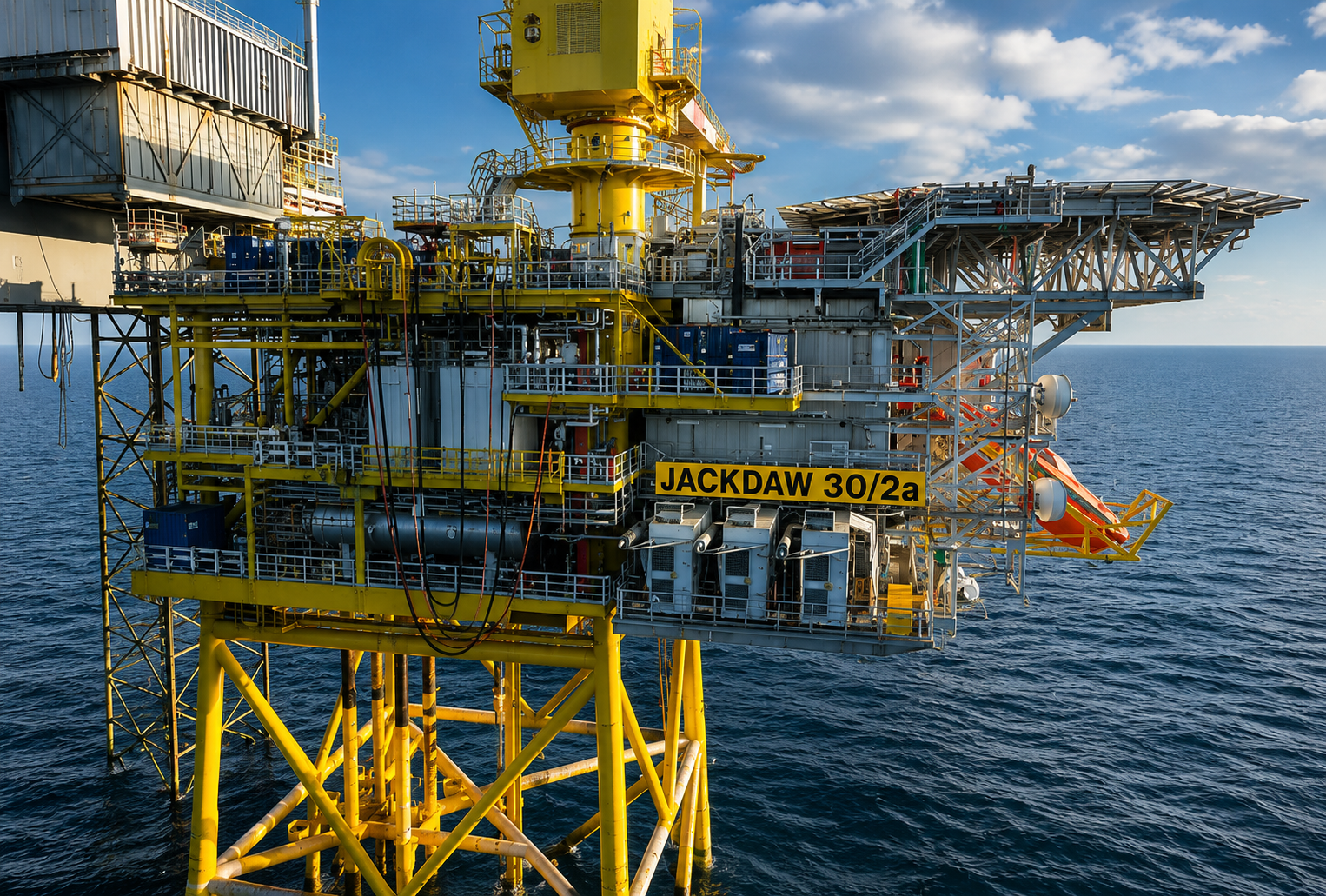
Jackdaw Gas Field Report Claims Emissions Will Have Limited Climate Impact
The Jackdaw gas field has once again become the focus of debate after its owner, Adura, released an updated Environmental Impact Assessment (EIA) stating that emissions from the North Sea project would “not materially influence” global climate change. According to the company, greenhouse gas emissions generated during the field’s lifetime would account for less than 0.02% of annual global emissions, suggesting the overall contribution to global warming would be minimal.The updated assessment follows a court ruling that found the UK government’s previous approval of the Jackdaw gas field unlawful because the environmental consequences of burning the extracted gas had not been fully considered. Environmental organisations continue to oppose the project, arguing that new fossil fuel developments are incompatible with international climate targets.
Why a New Environmental Assessment Was Required
The latest Environmental Impact Assessment was requested by the Offshore Petroleum Regulator for Environment and Decommissioning (Opred) after officials determined that Adura’s earlier submission failed to provide sufficient information about the long-term climate implications of the project.The review follows a landmark legal decision by the Court of Session in Edinburgh, where Lord Ericht ruled that government approval for both the Jackdaw gas field and the Rosebank oil field was legally flawed.The judgment concluded that ministers had not adequately assessed the environmental impact created when oil and gas extracted from these developments would eventually be burned by consumers.As a result, Adura was instructed to prepare a more detailed climate assessment before fresh government approval could be considered.
Adura Says Global Climate Impact Will Be Very Small
In its updated 159-page report, Adura argues that emissions from the Jackdaw gas field would have only a very limited impact on global warming.The company estimates that the project’s total emissions over its operational lifetime would reach approximately 35.8 million tonnes of carbon dioxide equivalent (CO₂e).Although this figure appears significant when compared with Scotland’s annual emissions, Adura argues that it represents less than 0.02% of worldwide annual greenhouse gas emissions, making its overall contribution to climate change relatively small.The company therefore concludes that the project’s impact on international efforts to limit global warming would not be materially significant.
Domestic Gas Could Reduce Import Emissions
One of Adura’s central arguments is that producing gas from the Jackdaw gas field could actually reduce emissions associated with importing liquefied natural gas (LNG).According to the assessment, replacing imported LNG—particularly shipments from the United States—with domestically produced North Sea gas could save the equivalent of around four million tonnes of carbon dioxide emissions over time. The report explains that imported LNG requires several energy-intensive stages before reaching UK consumers.These include liquefaction at export facilities, transportation by specialised ships across the Atlantic, and regasification once the fuel arrives in Britain.Each of these processes adds additional greenhouse gas emissions.Producing gas closer to home would eliminate much of this transportation chain, resulting in lower overall emissions compared with imported fuel.Adura estimates that imported LNG could generate approximately 20% more emissions than gas extracted directly from UK waters.
Company Says UK Industry Meets International Standards
The report also argues that Britain’s offshore energy industry operates under strict environmental regulations designed to reduce emissions.According to Adura, the UK energy sector follows climate commitments consistent with the objectives of the Paris Agreement, the international treaty aimed at limiting global warming to between 1.5°C and 2°C above pre-industrial levels. The company believes these regulations help minimise environmental impacts throughout the production process.Adura therefore maintains that continued development of domestic gas resources can support energy security while remaining compatible with existing climate policies.
Environmental Campaigners Remain Strongly Opposed
Despite the updated assessment, environmental organisations continue to challenge the Jackdaw gas field.Groups including Uplift and Greenpeace, which successfully brought the original legal challenge, argue that the project is inconsistent with Britain’s climate commitments.Tessa Khan, Executive Director of Uplift, said the project would have little impact on household energy bills and would do very little to reduce Britain’s dependence on imported gas.She argued that after decades of North Sea production, the UK has already extracted much of its accessible natural gas, making relatively small new developments like Jackdaw unlikely to transform national energy security.According to Khan, the country should instead accelerate investment in renewable energy rather than expanding fossil fuel production.
Greenpeace Rejects Adura’s Climate Claims
Environmental campaigners have strongly criticised the conclusions presented in Adura’s updated Environmental Impact Assessment. Greenpeace UK said the company’s findings should not be accepted without careful independent scrutiny, arguing that the report reflects the commercial interests of the project developer rather than the broader public interest.Doug Parr, Chief Scientist at Greenpeace UK, said the Jackdaw gas field remains fundamentally incompatible with international efforts to limit global warming.According to Parr, approving new oil and gas developments while governments are committed to reducing carbon emissions sends conflicting signals about the UK’s climate ambitions.He argued that the amount of gas expected from Jackdaw would make little difference to the UK’s long-term energy security while adding additional greenhouse gas emissions that the world can ill afford.
Court Ruling Changed the Approval Process
The current debate follows an important legal ruling issued by the Court of Session in Edinburgh last year.The court concluded that government ministers had unlawfully approved both the Jackdaw gas field and the Rosebank oil field because they failed to fully consider the emissions produced when the extracted oil and gas would eventually be burned by consumers.Lord Ericht ruled that these downstream emissions are an important part of any environmental assessment and should be taken into account before approval is granted.As a result, both projects require updated environmental assessments and fresh government consent before production can move forward.The decision has become one of the most significant legal developments affecting future North Sea oil and gas projects.
Jackdaw and Rosebank Remain at the Centre of Energy Debate
The Jackdaw gas field and the Rosebank oil field have become symbols of the wider debate over Britain’s energy future. Supporters argue that domestic gas production reduces dependence on imported fuels, strengthens national energy security and supports employment throughout the offshore energy industry.They also argue that producing gas under the UK’s strict environmental regulations may generate fewer emissions than importing liquefied natural gas from overseas.Opponents, however, believe that approving new fossil fuel projects risks slowing the country’s transition toward cleaner renewable energy sources such as offshore wind, solar power and hydrogen.Environmental organisations maintain that investment should instead focus on technologies capable of reducing carbon emissions over the coming decades.
Can the Jackdaw Gas Field Improve UK Energy Security?
Adura continues to argue that the Jackdaw gas field would provide an important source of domestically produced natural gas. According to the company, using gas extracted from the North Sea would reduce the need for imports that require liquefaction, long-distance shipping and regasification before entering the UK market.Those additional stages consume significant amounts of energy and increase total greenhouse gas emissions.Adura estimates that imported LNG can generate around 20% more carbon emissions than gas produced domestically. The company therefore believes Jackdaw could contribute both to energy security and lower overall emissions compared with imported alternatives. However, environmental groups dispute these conclusions, arguing that the overall contribution to Britain’s gas supply would remain relatively modest.
Climate Commitments Continue to Shape Government Decisions
The UK government remains legally committed to achieving net zero greenhouse gas emissions by 2050 while also meeting its international obligations under the Paris Agreement.These commitments require policymakers to balance energy security with climate protection.Future decisions regarding the Jackdaw gas field are therefore expected to receive intense political, legal and scientific scrutiny.Government ministers will need to examine Adura’s revised Environmental Impact Assessment alongside feedback from regulators, environmental experts and campaign organisations before deciding whether the project should receive fresh approval.The Offshore Petroleum Regulator for Environment and Decommissioning (Opred) will also review the updated assessment as part of the approval process.
What Happens Next?
Following submission of the revised Environmental Impact Assessment, regulators will now evaluate whether Adura has adequately addressed the concerns identified by the court.If the assessment satisfies regulatory requirements, the UK government will then decide whether to issue new development consent for the Jackdaw gas field.Environmental organisations have already indicated they will continue challenging any decision they believe conflicts with Britain’s climate commitments. The outcome could also influence how future offshore oil and gas developments are assessed across the UK.Many industry experts believe the final decision will set an important precedent for balancing domestic energy production with environmental responsibilities.
Conclusion
The Jackdaw gas field remains one of the UK’s most closely watched energy projects. Adura argues that the field’s greenhouse gas emissions will have only a minimal effect on global climate change and that producing gas domestically could reduce emissions associated with imported liquefied natural gas.However, environmental organisations including Greenpeace and Uplift strongly disagree, insisting that approving any new fossil fuel development undermines efforts to limit global warming and meet international climate targets.Following last year’s court ruling, regulators and government ministers must now carefully assess whether the updated Environmental Impact Assessment provides sufficient evidence to justify fresh approval. The final decision is expected to play a significant role in shaping the future of UK energy policy, North Sea development and climate action for years to come.