

Russian Fuel Shortages Expose the Growing Economic Impact of the Ukraine War
Russian fuel shortages are becoming increasingly visible across the country as long queues form outside petrol stations and fuel supplies continue to tighten. The crisis, triggered largely by repeated Ukrainian attacks on Russia’s energy infrastructure, is now affecting daily life even in Moscow, highlighting how the Ukraine war is placing growing pressure on Russia’s domestic economy.While the Kremlin insists that the situation remains under control, many Russians are experiencing delays, rising fuel prices and uncertainty over future supplies. The shortages have also reignited debate over whether mounting economic challenges could eventually influence President Vladimir Putin’s strategy in the Ukraine war.
Long Queues Become the New Normal in Moscow
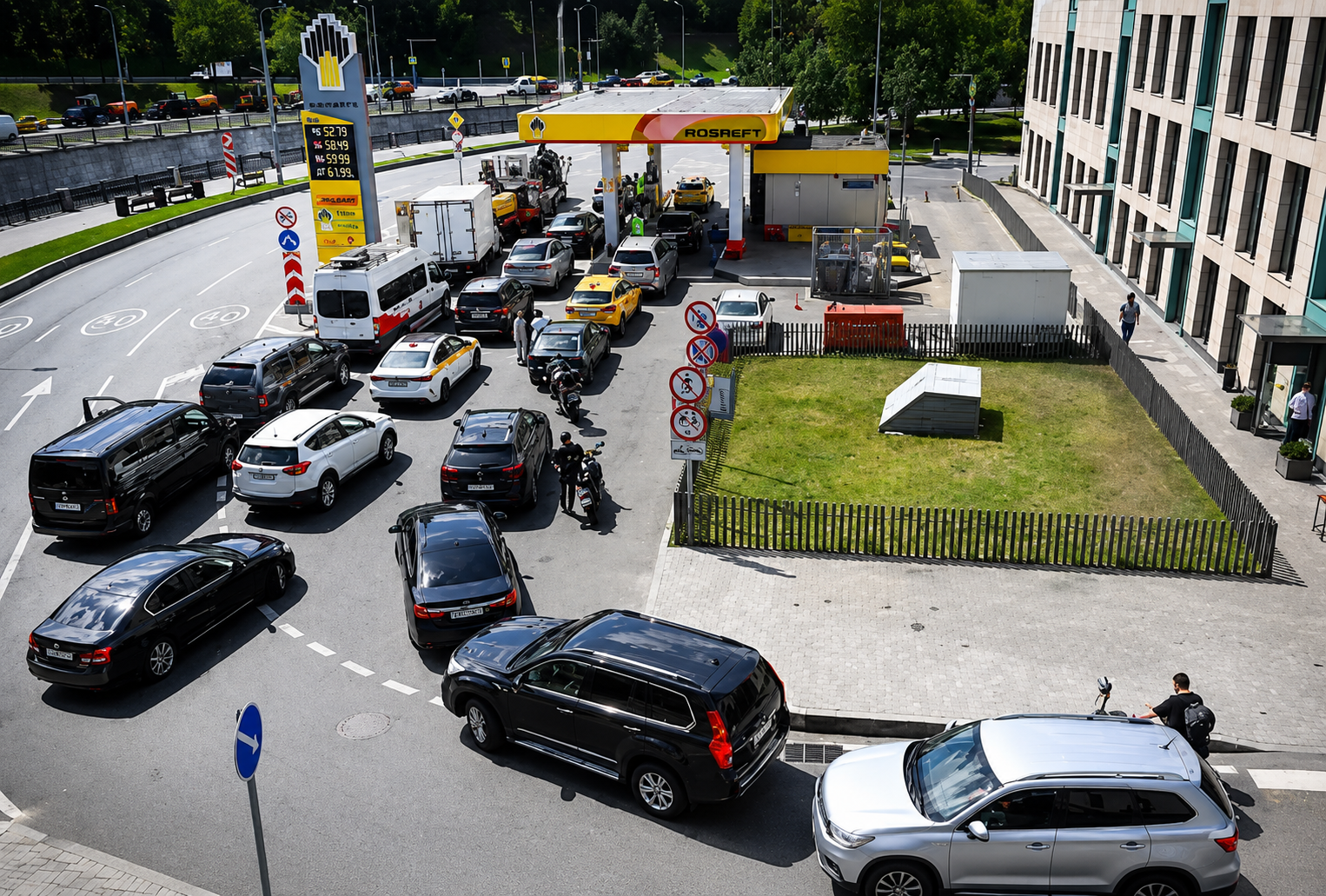
For many drivers in Moscow, finding fuel has become a daily challenge.At numerous petrol stations across the Russian capital, long queues of cars and trucks have become a common sight. Some stations continue serving customers slowly, while others have temporarily closed after running out of fuel altogether.The situation is particularly striking because Moscow receives a significant share of Russia’s national resources and is generally better supplied than many other regions.Despite the inconvenience, frustration among motorists has not yet developed into widespread public anger.One driver, Yekaterina, admitted she was worried that fuel supplies could continue shrinking but believed authorities simply needed to improve oil distribution across the country.Another resident, Elmar, described the situation as “very bad,” pointing to increasing fuel prices and long waiting times. He explained that he was considering cancelling a planned road trip because he was unsure whether petrol would be available along the route.When asked who was responsible for the crisis, he smiled and suggested that openly blaming authorities was not something people generally do in Russia.
Ukrainians Continue Targeting Russia’s Energy Infrastructure
The Russian fuel shortages have been largely linked to Ukraine’s expanding campaign against Russian oil facilities.Since the conflict began, Ukrainian forces have steadily increased long-range drone and missile attacks on refineries, storage depots and energy infrastructure located hundreds of kilometres inside Russian territory.These strikes have disrupted refining capacity, making it increasingly difficult for Russia to produce enough petrol and diesel to satisfy domestic demand.At the same time, residents of major cities such as Moscow and St Petersburg have become increasingly familiar with air raid alerts, drone attacks and temporary internet shutdowns introduced by authorities during security operations.Although the fighting remains concentrated along the front lines in Ukraine, its economic effects are now being felt much more directly by ordinary Russian citizens.
Russians Express Concern but Continue to Endure
Many Russians acknowledge that conditions have become more difficult but remain cautious when discussing politics publicly. Driver Valery said it felt unusual to stand in long petrol queues in one of the world’s largest oil-producing countries.Rather than blaming only Ukrainian attacks, he also questioned whether Russian authorities had adequately prepared for such disruptions. Another motorist, Andrei, argued that “geopolitics” was responsible for the current crisis and suggested that all parties should move toward negotiations aimed at reaching a peace agreement.However, he also believed that diplomatic progress currently appeared unlikely.Like many Russians, he compared today’s difficulties with the economic hardships experienced during the 1990s, saying that people had survived worse situations before.That sense of endurance remains common across much of Russian society despite growing economic pressures.
Fuel Rationing Expands Across Russia
Outside Moscow, the situation has become even more challenging.Videos shared across social media show queues stretching for several kilometres, with occasional arguments breaking out among frustrated drivers waiting for fuel.Authorities in several regions have introduced rationing measures to conserve supplies.Some municipalities have banned motorists from filling portable fuel containers, while others have reduced bus services and public transport schedules to save diesel.In parts of Siberia, local officials have even installed portable toilets for motorists waiting in exceptionally long petrol queues.Farmers have also expressed concern that fuel shortages could disrupt harvesting operations during the summer season, creating additional pressure on Russia’s agricultural sector.
Kremlin Moves to Limit the Impact
President Vladimir Putin has publicly acknowledged that Ukrainian attacks are creating problems for Russia’s fuel supply. Speaking on state television, he admitted the strikes were affecting the country’s energy sector but insisted the situation remained manageable and was “not critical.”Behind the scenes, however, Russian authorities have already introduced several emergency measures.These include increasing fuel imports, subsidising domestic fuel prices and allowing lower-quality fuel products onto the market to maintain supplies. Officials hope these measures will prevent shortages from becoming even more severe while reducing pressure on consumers.Public Opinion Begins to Shift As the Russian fuel shortages continue to disrupt daily life, public opinion appears to be changing. While many Russians still support the government, recent surveys suggest that economic concerns are beginning to influence how people view the country’s direction.The independent Levada Center reported that President Vladimir Putin’s approval rating has slipped to around 74%. Although this remains relatively high, it represents a noticeable decline compared with previous months.The same survey found that only 52% of respondents now believe Russia is moving in the right direction, down from 61% in May. These figures suggest that economic pressures, including fuel shortages and rising living costs, are beginning to affect public confidence. International polling organisation Gallup also reported that Russians are more pessimistic about their local economies than at any point in the last two decades. Around 60% of respondents said economic conditions where they lived had worsened.Even Russia’s state-run polling organisation, VCIOM, indicated a slight decline in public trust in Putin, showing a drop of more than three percentage points within a single week.
Experts Say the Fuel Crisis Could Hurt Russia’s Economy
Economic analysts believe the current Russian fuel shortages could have wider consequences beyond long queues at petrol stations.Christopher Weafer, head of consultancy Macro Advisory, described the crisis as a potential “game-changer” for Russia’s economy.According to Weafer, the financial costs of the Ukraine war continue to rise, while disruptions to fuel production threaten growth across several industries.The full economic impact may not become visible until later in the year, but slower industrial activity, transportation delays and increased operating costs could significantly reduce Russia’s growth prospects.Businesses that rely heavily on transport—including agriculture, manufacturing and logistics—are already feeling the pressure as fuel becomes harder to obtain.
Will Economic Pressure Force Putin to Change Course?
Despite the growing economic strain, many analysts remain sceptical that the Russian fuel shortages will persuade President Vladimir Putin to alter his military strategy.Nina Khrushcheva, Professor of International Affairs at The New School in New York, believes the Kremlin is unlikely to soften its position.Instead, she argues that increased pressure may encourage the Russian leadership to respond even more aggressively while tightening domestic controls.She also dismissed suggestions that economic frustration alone could trigger major political change inside Russia.According to Khrushcheva, although many Russians feel exhausted and concerned about current conditions, there is also a widespread sense of resignation. Public dissatisfaction does not necessarily translate into organised political opposition.
Putin Continues to Signal Determination
Recent public appearances suggest President Putin remains committed to continuing the conflict.Last week he was shown wearing military fatigues while meeting Russian commanders near the front line. During the meeting he claimed that Russian forces continued to hold the strategic initiative and promised further territorial gains.Putin also instructed military officials to analyse what he described as the increasing involvement of Ukraine’s European allies in direct combat operations.Although he did not explain what future actions Russia might take, his comments immediately attracted attention among Western diplomats and defence analysts.Many now wonder whether the Kremlin could respond with further military escalation if the conflict continues to intensify.
Western Governments Watch Closely
NATO leaders and Western governments are carefully monitoring developments inside Russia.Ukraine hopes that growing economic problems—including the Russian fuel shortages—will gradually increase domestic pressure on the Kremlin to pursue negotiations.However, many experts caution against expecting rapid political change.Historically, Russia has demonstrated a strong capacity to endure economic hardship during periods of conflict. Government control over state media and political institutions also limits the likelihood that public frustration will quickly transform into organised opposition.Instead, the current situation presents a complex picture in which economic challenges are increasing while the Kremlin continues to project confidence.
What Happens Next?
The coming months may prove crucial for both Russia’s economy and the wider Ukraine conflict.If Ukrainian attacks continue targeting refineries and energy infrastructure, fuel production could remain under pressure, increasing costs for businesses and households alike.At the same time, Moscow is attempting to stabilise supplies through imports, subsidies and emergency policy measures. Whether those efforts will fully ease the shortages remains uncertain.International observers are also watching to see whether continued economic difficulties eventually influence Russia’s political calculations or simply reinforce the government’s determination to continue the war.
Conclusion
The growing Russian fuel shortages have become one of the clearest signs that the Ukraine war is increasingly affecting everyday life inside Russia. Long queues at petrol stations, higher fuel prices and supply disruptions are placing additional pressure on households, businesses and the wider economy.Although recent opinion polls suggest public confidence has weakened slightly, most analysts believe these economic difficulties alone are unlikely to force President Vladimir Putin to change his approach to the conflict. Instead, the Kremlin continues to emphasise military objectives while introducing measures to reduce the impact of fuel shortages.As Ukraine maintains its long-range attacks on Russian energy infrastructure and Russia seeks to stabilise domestic supplies, the fuel crisis is expected to remain an important factor shaping both the country’s economy and the broader course of the war.